






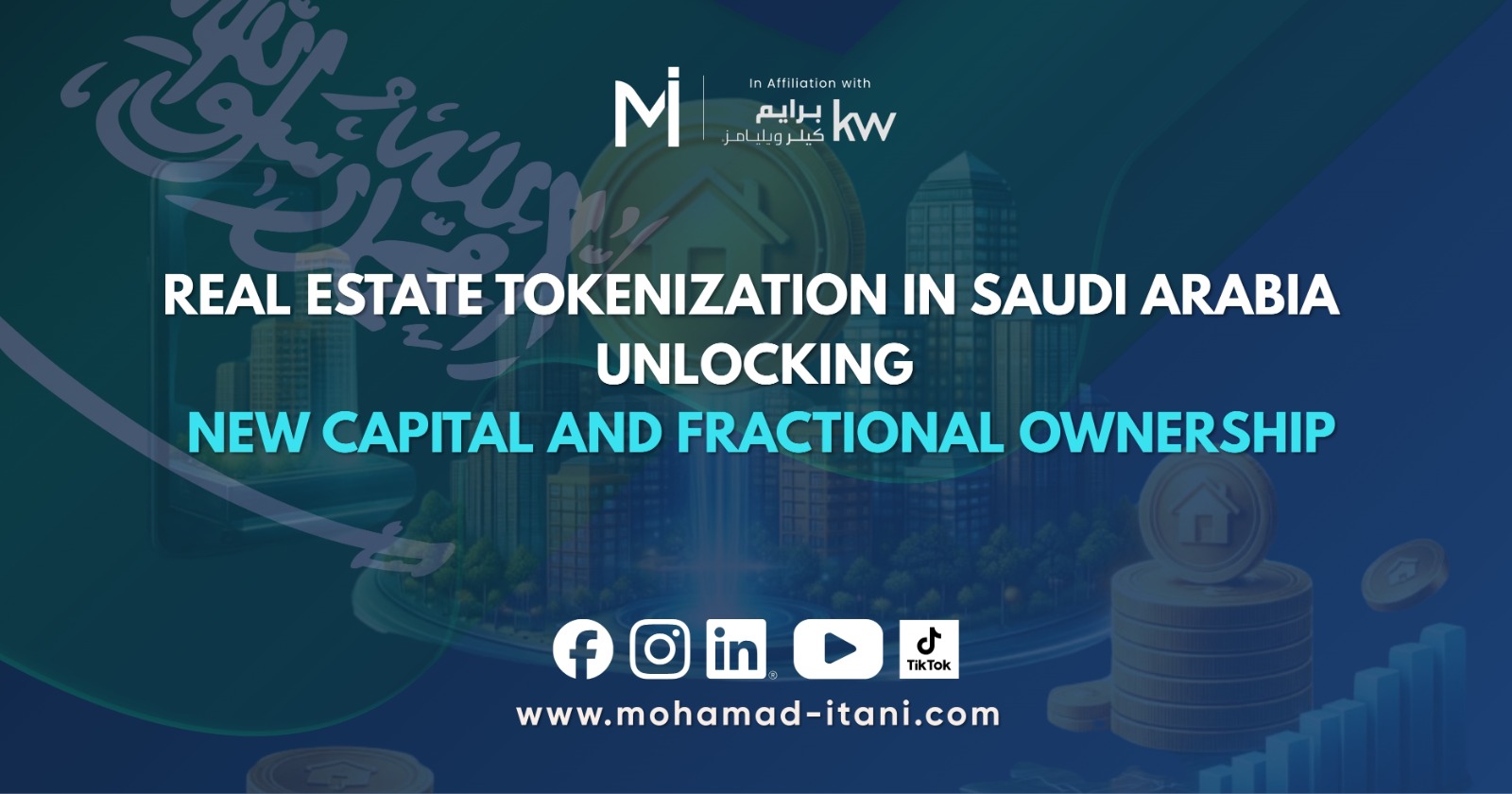
Real estate tokenization is no longer a futuristic concept—it is actively reshaping how capital flows, increasing market liquidity, and broadening investor access across Saudi Arabia. For forward-thinking developers and PropTech professionals, the transition from traditional brick-and-mortar transactions to blockchain-based digital assets represents a historic opportunity.
Tokenization converts physical property ownership or a direct claim on its cash flows into secure digital tokens. This enables fractional ownership, faster settlement times, programmable dividend distributions, and entirely new financing structures. As the Kingdom’s real estate market evolves rapidly, adopting these digital frameworks can accelerate sales, diversify funding channels, and attract both local retail investors and institutional global capital.
Pioneering Pilots to National Infrastructure
The momentum behind Saudi Arabia’s tokenized real estate market has accelerated dramatically. In June 2025, droppRWA announced a landmark pilot partnership with RAFAL Real Estate to execute the Kingdom’s first Real-World Asset (RWA) tokenization transaction. Designed to test feasibility across RAFAL’s extensive portfolio, this initiative introduced the concept of fractional ownership starting from single-digit riyals.
At the regulatory level, the Real Estate General Authority (REGA) has decisively moved from isolated pilots to official, scalable programs. In late 2025, REGA successfully completed the Kingdom’s first government-supervised property tokenization, overseeing a title deed traded between the National Housing Company (NHC) and multiple investors. Furthermore, REGA committed to publishing stringent technical tokenization standards in 2026 to ensure a regulated, highly secure market rollout.
Infrastructure developments are moving in lockstep with these regulations. The national Real Estate Registry (RER) deployed a sovereign-grade blockchain infrastructure with SettleMint, officially supporting digital fractionalization, title management, and marketplace integration. Private-sector capacity is also expanding. In early 2026, Open World launched the Saudi RWA Tokenization Center of Excellence, providing crucial operational and regulatory expertise to ensure projects meet SAMA and CMA compliance requirements.
Strategic Advantages for Developers and Brands
For professionals managing real estate portfolios, branding, and market positioning across competitive, high-growth markets like Saudi Arabia, Dubai, and Turkey, the shift toward tokenized assets demands a modernized approach.
Faster and Broader Capital Raising: Fractional tokens democratize access, significantly widening the investor pool to include everyday retail buyers alongside large institutions. This broader reach can drastically shorten funding timetables for large-scale residential and commercial projects.
Improved Liquidity and Exit Options: Traditional real estate is notoriously illiquid. Token marketplaces facilitate rapid secondary market transfers, offering secondary liquidity for assets that were previously locked up for years.
Lower Operating Friction: Through the use of smart contracts, administrative tasks such as dividend distributions, compliance workflows, and investor reporting become fully automated, drastically reducing overhead costs.
Competitive Differentiation: Early adoption provides a massive marketing advantage. For teams crafting brand identities and promotional content, marketing a tokenized project allows you to position the development as an innovative, accessible asset aligned directly with Vision 2030. Presenting these digital assets requires a shift in branding strategy moving from traditional brochures to dynamic, digital-first campaigns. High-quality visual communication, including professional video content and sharp brand identities, is essential to educate retail investors and build trust in these novel financial products.
Actionable Steps for Real Estate Professionals
The ecosystem is primed. With active government participation, a functioning national registry, and private-sector centers of excellence now operational, Saudi Arabia possesses all the necessary ingredients for scalable tokenized property projects.
Developers, marketing teams, and PropTech innovators must ride this wave by immediately integrating blockchain strategies into their core business plans. Those who thoughtfully test and deploy tokenization frameworks today will unlock new capital pools, optimize project economics, and secure their position at the forefront of the digital real estate revolution.
Frequently Asked Questions (FAQs)
- 1. What exactly is real estate tokenization?
It is the process of converting the value of a physical property, or the rights to its ongoing cash flows, into digital tokens on a blockchain. Each token represents a fractional share of that specific asset, allowing multiple investors to securely co-own a single property.
2. Is property tokenization legal and regulated in Saudi Arabia?
Yes. The Real Estate General Authority (REGA) actively regulates this space. The first official government-supervised transaction involving the National Housing Company was completed in 2025, and official technical standards are currently being rolled out to ensure strict market compliance.
3. How does tokenization benefit everyday retail investors?
It drastically lowers the financial barrier to entry. Instead of needing millions of riyals to purchase a full property, retail investors can buy fractional shares for much smaller amounts, sometimes starting at single-digit riyals, granting them direct access to high-value real estate markets.
4. Can foreign investors participate in Saudi tokenized real estate?
With the new Non-Saudi Real Estate Ownership Law entering into force in January 2026, the pathway for international capital is expanding. Foreign investors can participate in tokenized assets through regulated digital portals, subject to specific regulatory guidelines, tax structures, and regional zoning rules.