







Rental Yields in Riyadh, Jeddah: Where Investors Are Earning Most
If you are eyeing high-performing rental yields across major Saudi cities, understanding the shifting micro-markets between Riyadh, Jeddah, and the Eastern Province (Dammam/Khobar) is essential. In 2026, Saudi Arabia stands out as one of the most lucrative real estate investment destinations in the Middle East. Driven by transformative mega-projects under Saudi Vision 2030, rapid population expansion, Regional Headquarters (RHQ) mandates drawing thousands of multinational executives, and liberalized foreign ownership regulations, residential yields across the Kingdom continue to outshine most global hubs.
However, achieving top-tier returns is no longer as simple as purchasing a residential unit and listing it online. Rental performance in 2026 is hyper-local—varying dramatically by city, neighborhood, asset class, and rental model (long-term vs. short-term). While Riyadh leads the nation for institutional stability and corporate demand, Jeddah offers a hybrid model of coastal lifestyle and seasonal tourism, Dammam/Khobar delivers high cash flow at lower entry prices, and the Holy Cities of Makkah and Madinah present unmatched seasonal short-term returns.
This comprehensive guide breaks down actual yield data, district-level performance, short-term rental dynamics, and actionable steps to optimize your portfolio cash flow in 2026.
1. Understanding Rental Yield Mechanics in Saudi Arabia
Before evaluating specific neighborhoods, every investor must master how property returns are calculated and how local market dynamics impact real income in the Kingdom.
Gross Yield vs. Net Yield: The Investor Baseline
Rental yield measures the annual income generated by a property as a percentage of its total purchase value. However, confusing gross yield with net yield is a common trap for first-time buyers.
-
Gross Rental Yield: Calculates total top-line rental income relative to the asset’s acquisition price.
-
Net Rental Yield: Reflects true profitability by deducting recurring operational expenditures, including HOA service fees, property management commissions, routine maintenance, white-goods servicing, insurance, and municipal charges.
The comparison table below demonstrates how operational expenses impact bottom-line returns for a typical 2-bedroom apartment purchase in North Riyadh:
| Financial Metric | Calculation Formula | Example Scenario (Al Narjis Apartment) |
| Property Acquisition Cost | Purchase Price + Closing Costs | SAR 900,000 |
| Gross Annual Rental Income | Monthly Rent × 12 Months | SAR 70,000 |
| Gross Rental Yield | (Gross Rent ÷ Property Cost) × 100 | 7.78% |
| Operating Expenses (HOA, Maintenance, Void) | Service Fees + Upkeep Costs | SAR 12,000 |
| Net Annual Rental Income | Gross Rent − Operating Expenses | SAR 58,000 |
| Net Rental Yield | (Net Rent ÷ Property Cost) × 100 | 6.44% |
Why Saudi Arabia Outperforms Global Benchmarks
Unlike Western or traditional European real estate markets—where gross rental yields hover between 2.5% and 4.5% and are heavily taxed—investing in a property in Saudi Arabia offers two structural advantages:
-
Zero Income Tax on Residential Rental Earnings: Saudi Arabia levies no personal income tax on rental yields for individual property owners.
-
Inelastic Corporate & Demographic Demand: Ongoing economic expansion, high expat family immigration, and rising domestic homeownership create sustained demand across primary urban corridors.
While commercial institutional assets are tracked by market reports from JLL Middle East و Knight Frank KSA, residential yields in 2026 continue to provide private investors with strong inflation hedges and income security.
2. Year-over-Year Yield Comparison: 2024 to 2026
The Saudi residential market has undergone distinct shifts over the past three years. In Riyadh, residential sale prices experienced historic capital appreciation between 2021 and 2025, which gradually compressed gross yields even as absolute rental amounts reached all-time highs. Conversely, secondary hubs like Dammam/Khobar have seen expanding yields as rental growth outpaced purchase price gains.
The table below illustrates the three-year trajectory of average residential gross yields across major Saudi urban centers:
| Year | Riyadh Avg Yield | Jeddah Avg Yield | Dammam / Khobar Avg Yield | Primary Market Driver |
| 2024 | 6.5% – 8.0% | 5.0% – 6.5% | 5.5% – 7.0% | Corporate RHQ arrivals & Metro infrastructure delivery |
| 2025 | 6.0% – 8.0% | 5.0% – 6.5% | 5.5% – 7.0% | Accelerated urban expansion & red-hot sales price growth |
| 2026 | 6.0% – 8.0% (Stable) | 5.0% – 6.5% (Stable) | 6.0% – 7.5% (Growing) | Energy sector CAPEX, low entry price, & robust tenant absorption |
Key Takeaway for 2026: Although capital growth in Riyadh has normalized gross yields in the 6% to 8% band, total investor return (Yield + Capital Appreciation) remains higher in the capital than in any other GCC market. Meanwhile, Dammam/Khobar offers the highest cash-on-cash entry opportunities for investors seeking immediate yields above 7%.
3. Deep Dive: City-by-City Rental Yield Analysis
A. Riyadh: Capital Growth Engine & Executive Rental Hub
Riyadh is the financial powerhouse of Saudi Arabia. Driven by the government’s Regional Headquarters (RHQ) initiative—which requires multinational firms to establish their Middle East headquarters in the capital to secure government contracts—the influx of white-collar professionals has created record demand for executive housing.
Investors searching for a high-yield home for rent in riyadh or a modern apartment must distinguish between the capital’s distinct zones:
| District / Zone | Property Focus | Gross Yield Range | Estimated Net Yield | Tenant Profile |
| Al Narjis & Al Yasmin | 1–2 Bed Apartments | 7.5% – 8.2% | 6.2% – 6.6% | Tech consultants, financial analysts, young professionals |
| Hittin & Al Malqa | Luxury Villas & 3-Beds | 5.2% – 6.2% | 4.2% – 5.1% | C-suite executives, senior diplomats, high-net-worth families |
| Central (Al Olaya) | Mid-Rise Apartments | 6.8% – 7.8% | 5.5% – 6.4% | Corporate staff near KAFD and King Fahd Road |
| Gated Compounds | Executive Villas | 6.0% – 7.2% | 5.2% – 6.0% | Multinational expats requiring community amenities |
-
North Riyadh Corridor (Al Malqa, Hittin, Al Yasmin, Al Narjis): Positioned close to King Abdullah Financial District (KAFD) and connected via the King Salman Road axis, North Riyadh is the single most requested location for incoming expatriates looking for a house for rent in riyadh.
-
Riyadh Gated Compounds: Demand to rent in riyadh compounds remains intensely tight, with occupancy rates in tier-one gated communities exceeding 95%. While capital expenditure for purchasing compound units is significant, long-term corporate leases provide unrivaled payment security and minimal default risk.
Investors comparing asset formats should read our deep-dive comparison on off-plan vs ready properties to optimize entry timing and cash flow.
B. Jeddah: Coastal Lifestyle, Red Sea Tourism & Steady Cash Flow
Jeddah remains the commercial and tourism gate to the Western Province. While capital growth rates in Jeddah are more moderate than in Riyadh, the city offers lower acquisition entry barriers and stable, long-term tenant occupancy.
| District / Zone | Market Focus | Gross Yield Range | Estimated Net Yield | Key Demand Drivers |
| Al Salamah & Al Rawdah | Long-Term Apartments | 7.5% – 7.9% | 6.2% – 6.6% | Healthcare workers, airline staff, local families |
| Al Shati & Corniche | Luxury Waterfront Units | 4.8% – 5.8% | 3.8% – 4.7% | High net-worth buyers, executive short-stays |
| Obhur Al Shamaliyah | Mid-Range Housing | 6.0% – 6.8% | 5.0% – 5.7% | Expansion near KAIA Airport & Jeddah Central project |
-
Al Salamah & Al Rawdah (Mid-Town Core): Al Salamah represents one of the highest yield-to-price ratios in the Western Province. Modern 1-bedroom and 2-bedroom units achieve gross yields between 7.5% and 7.9%, yielding a net return of 6.2% to 6.6%.
-
Obhur Al Shamaliyah (North Jeddah Expansion): Fueled by the expansion of King Abdulaziz International Airport and Jeddah Central megaprojects, Obhur is rapidly absorbing young families looking for a quality house for rent in jeddah.
For a structural breakdown between the capital and the coastal hub, explore our analysis on Riyadh vs Jeddah investment.
C. Dammam & Al Khobar: The Eastern Province’s High-Yield Cash Engine
The Eastern Province—anchored by Dammam, Al Khobar, and Dhahran—is Saudi Arabia’s industrial and energy heartbeat. Supported by Saudi Aramco’s massive capital expenditure programs, industrial expansion in Jubail, and growing cross-border commerce via the King Fahd Causeway to Bahrain, the Eastern Province has quietly emerged as a top choice for yield-focused investors.
| District / City | Average Purchase Price (2-Bed) | Estimated Gross Yield | Estimated Net Yield | Dominant Tenant Profile |
| Al Khobar Corniche | SAR 750,000 – 950,000 | 5.0% – 6.2% | 4.0% – 5.1% | Regional executives, expat lifestyle tenants |
| Dhahran Core | SAR 550,000 – 700,000 | 6.5% – 7.8% | 5.4% – 6.5% | Saudi Aramco contractors, KFUPM faculty |
| Dammam (Al Faisaliyah) | SAR 300,000 – 430,000 | 10.6% – 11.2% | 7.8% – 8.3% | Energy, logistics, and port sector workforce |
| Dammam (Al Hamra) | SAR 345,000 – 480,000 | 11.1% – 12.2% | 8.2% – 9.0% | Mid-market corporate tenants seeking prime value |
1. Al Khobar Corniche & Al Khobar North
-
Yield Metrics: Gross yields sit between 5.0% and 6.2% for standard long-term residential units. High asset purchase prices compress long-term gross yield, but vacancy rates are exceptionally low. The area caters to senior Aramco contractors, regional corporate directors, and executive families.
2. Dhahran (Near Aramco HQ & KFUPM)
-
Yield Metrics: Gross rental yields average 6.5% to 7.8%. Dhahran benefits from structurally constrained real estate supply paired with deep, high-income tenant demand. Proximity to King Fahd University of Petroleum and Minerals (KFUPM) and Saudi Aramco headquarters ensures low vacancy rates.
3. Dammam City Center (Al Faisaliyah & Al Hamra)
-
Yield Metrics: Gross rental yields range between 10.6% and 12.2%, producing industry-leading net yields of 7.8% to 9.0%. Dammam delivers some of the lowest acquisition entry prices in major Saudi metropolitan areas. A two-bedroom apartment in Dammam can be acquired for significantly less capital than a comparable unit in North Riyadh, yet commands strong, reliable rents from logistics, port, and manufacturing personnel.
4. Short-Term Rental Yields (Airbnb-Style & Serviced Stays)
With the Saudi Ministry of Tourism streamlining licensing for short-term residential rentals through official portals, the short-stay market has become an extremely lucrative avenue for property owners. However, short-term rental performance is highly location-dependent, requiring active operations, professional housekeeping, and dynamic pricing algorithms.
| Target Market / District | Long-Term Gross Yield | Short-Term Gross Yield | Average Daily Rate (ADR) | Peak Demand Driver |
| Makkah (Haram Central Zone) | 5.5% – 6.5% | 12.0% – 18.5% | SAR 650 – SAR 2,500+ | Ramadan & Hajj seasonal spikes |
| Madinah (Markaziyah Area) | 5.8% – 6.8% | 10.5% – 15.0% | SAR 450 – SAR 1,400 | Year-round Umrah visitation |
| Jeddah Corniche / Al Shati | 5.0% – 6.0% | 8.5% – 12.0% | SAR 400 – SAR 1,100 | Summer holidays & Formula 1 |
| Riyadh (KAFD Corridor) | 7.0% – 8.0% | 9.5% – 13.0% | SAR 500 – SAR 1,200 | Riyadh Season & international business summits |
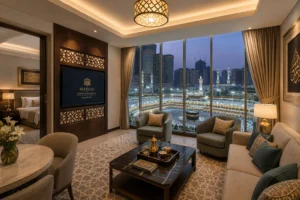
A. Makkah (Near Haram Central Zone)
-
Seasonal Yield Dynamics: Short-term rentals near the Holy Mosque (Al-Haram) operate on an extraordinary yield model. During peak spiritual seasons—specifically the last ten days of Ramadan and the Hajj pilgrimage—nightly room rates jump dramatically.
-
Yield Performance: While standard long-term residential rentals in outer Makkah yield 5.5% to 6.5%, licensed short-term serviced apartments within walking distance or immediate shuttle access to the Haram clock annualized gross yields between 12.0% and 18.5%.
B. Madinah (Central Haram District)
-
Year-Round Religious Tourism: Unlike Makkah, where demand peaks around major pilgrimage dates, Madinah enjoys consistent, year-round visitation from global Umrah pilgrims and domestic visitors visiting Al-Masjid an-Nabawi.
-
Yield Performance: Central residential units and boutique serviced suites achieve annualized short-term gross yields of 10.5% to 15.0%.
C. Jeddah Corniche / Al Shati District
-
Coastal Holiday Home Demand: Jeddah is Saudi Arabia’s premier domestic holiday and leisure market. Waterfront apartments along the Corniche and inside Al Shati cater to domestic weekend travelers from Riyadh, corporate guests attending Red Sea events, and international tourists.
-
Yield Performance: Transforming a luxury residential unit in Al Shati from a long-term lease (yielding ~5.2%) into a professionally managed short-term stay elevates gross returns to 8.5%–12.0%.
5. Actionable Checklist: 5 Ways to Maximize Rental Yield
To elevate your real estate cash flow from average to market-leading, implement these five proven investor strategies:
| Action Item | Recommended Strategy | Expected ROI / Rent Impact |
| 1. Furnishing Upgrades | Equip units with high-quality, modern furniture, fast Wi-Fi, and built-in appliances | +10% to +15% rent increase |
| 2. Flexible Payment Plans | Shift from 1–2 checks per year to 4–12 digital payment checks via Ejar | Cuts vacancy voids from 45 to <15 days |
| 3. Target Corporate Tenants | Secure corporate master leases with multinational firms and agencies | +10% to +20% rental premium |
| 4. District Short/Long Hybrid | Run short-term stays in peak winter/event seasons; mid-term in off-peak | +25% to +40% annualized revenue uplift |
| 5. Strategic Pricing Advisory | Work with local experts to price dynamically based on live market absorption | +1.0% to +2.0% direct net yield gain |
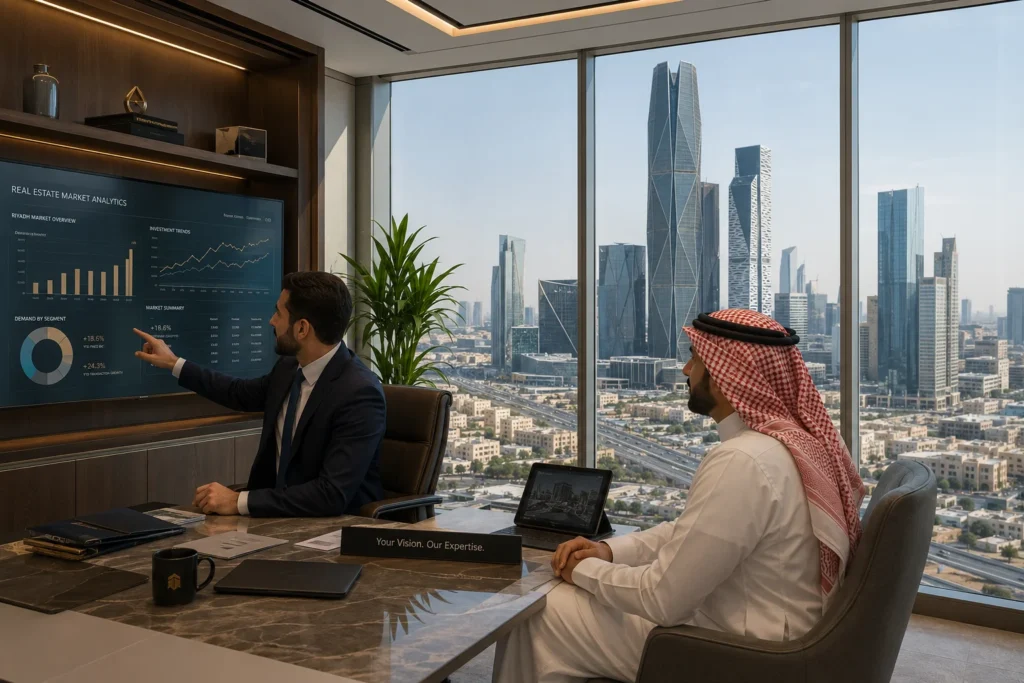
1. Execute High-Impact Furnishing Upgrades (+10% to +15% Rent Increase)
Expats arriving under corporate relocation programs overwhelmingly seek turn-key, move-in-ready homes. Equipping a vacant apartment with modern furniture, high-speed internet capability, and built-in kitchen appliances allows landlords to command a 10% to 15% rent premium over unfurnished units. A SAR 40,000 furnishing investment on a 2-bedroom unit can increase annual rent from SAR 65,000 to SAR 75,000, recovering the initial furniture outlay in under four years while boosting annual gross yield.
2. Transition to Flexible Payment Plans (Lower Vacancy Void Periods)
Historically, Saudi landlords demanded rent in a single annual check or two bi-annual payments. However, modern corporate tenants and young professional families strongly prefer 4-check or 12-check monthly direct debit payment structures via the official government Ejar portal. Offering multi-check payment terms reduces property listing void times from an average of 45 days down to under 15 days. Eliminating a month of vacancy effectively preserves 5% to 8% of your annual net yield.
3. Target Corporate Tenants Over Individual Short-Lease Tenants (+10% to +20% Premium)
Partner with corporate HR departments, multinational relocation agencies, and embassy housing boards to secure long-term master leases. Corporate entities pay premium rates (10% to 20% above individual market averages) in exchange for property compliance, safety certifications, and streamlined invoicing. Furthermore, corporate leases eliminate tenant default risks and guarantee zero-void cash flow over multi-year terms.
4. Deploy Dynamic Short-Term vs. Long-Term Hybrid Leasing
In coastal or tourist-heavy districts (e.g., Jeddah Corniche, North Riyadh near KAFD, central Madinah), adopt a hybrid model. Execute short-term tourist rentals during peak winter and event seasons, and switch to corporate 3-to-6 month mid-term leases during off-peak periods. This strategy boosts top-line annual rental income by 25% to 40% compared to a static 12-month residential contract.
5. Partner with a Specialized Real Estate Advisor for Dynamic Pricing
Overpricing leads to extended void periods, while underpricing leaves significant capital on the table. Working alongside experienced market consultants—such as Mohamad Itani and leading real estate advisors in KSA—ensures your acquisition pricing, rent setting, and tenant screening align with real-time market data. Professional asset management and pricing optimization typically add 1.0% to 2.0% directly to your net rental yield by eliminating lease friction and minimizing maintenance overruns.
To explore the broader national landscape, review our analysis of the best cities for real estate investment.
6. Official Data Sources & Market Benchmarks
To conduct thorough due diligence on saudi arabia property prices, institutional market health, and regulatory updates, consult these official authorities and independent research bodies:
| Organization / Authority | Key Information Provided | Official Resource Link |
| Saudi Real Estate General Authority (REGA) | Rental contract laws, broker licensing, non-Saudi ownership laws | REGA Official Portal |
| General Authority for Statistics (GASTAT) | Real Estate Price Index (REPI), census data, housing trends | GASTAT Official Portal |
| Saudi Vision 2030 Portal | Housing ownership targets, giga-project milestones | Vision 2030 Portal |
| Knight Frank KSA Intelligence | Commercial & residential market research reports | Knight Frank KSA |
| JLL Middle East | Quarterly GCC real estate market overviews & yield benchmarks | JLL Middle East |
7. Investor Verdict: Where Should You Invest Capital in 2026?
2026 Investor Matrix Summary
| Investor Goal | Target City / Region | Recommended Asset Class |
| Max Capital Appreciation | North Riyadh Corridor | Off-plan / Ready 1-2 Bed Apt |
| High Cash-on-Cash Yield | Dammam / Al Khobar | Mid-market Residential Apts |
| Seasonal Short-Stay ROI | Makkah & Madinah Core | Licensed Serviced Suites |
| Balanced Lifestyle & ROI | Jeddah North / Corniche | Waterfront / Boutique Units |
-
Riyadh is the Unrivaled Capital Growth Leader: If your goal is long-term wealth accumulation through a blend of steady 6%–8% gross yields and aggressive asset appreciation, Riyadh remains the undisputed premier choice in the GCC.
-
Dammam and Khobar are Cash-Flow Powerhouses: If you seek lower entry prices, high initial gross yields (7%–8%+), and steady corporate tenant demand tied to the industrial and energy sectors, the Eastern Province offers exceptional value.
-
Jeddah Delivers Stability and Lifestyle Flexibility: For investors desiring steady expat family rentals combined with short-term tourist rental upside along the coastal strip, Jeddah provides a resilient, balanced portfolio asset.
For high-net-worth investors seeking premium residential opportunities, read our guide on luxury real estate trends.